Check unfamiliar images and voices
Convincing appearance is not proof
Choose an independent check for an urgent voice message.
You will know why realistic media does not prove a claim or identity.
AI can create or alter pictures, video and voices. A deepfake imitates a person’s appearance or voice, but misleading media can also be an ordinary old picture shown in a false context. You do not need to prove how it was made before pausing and checking the claim.
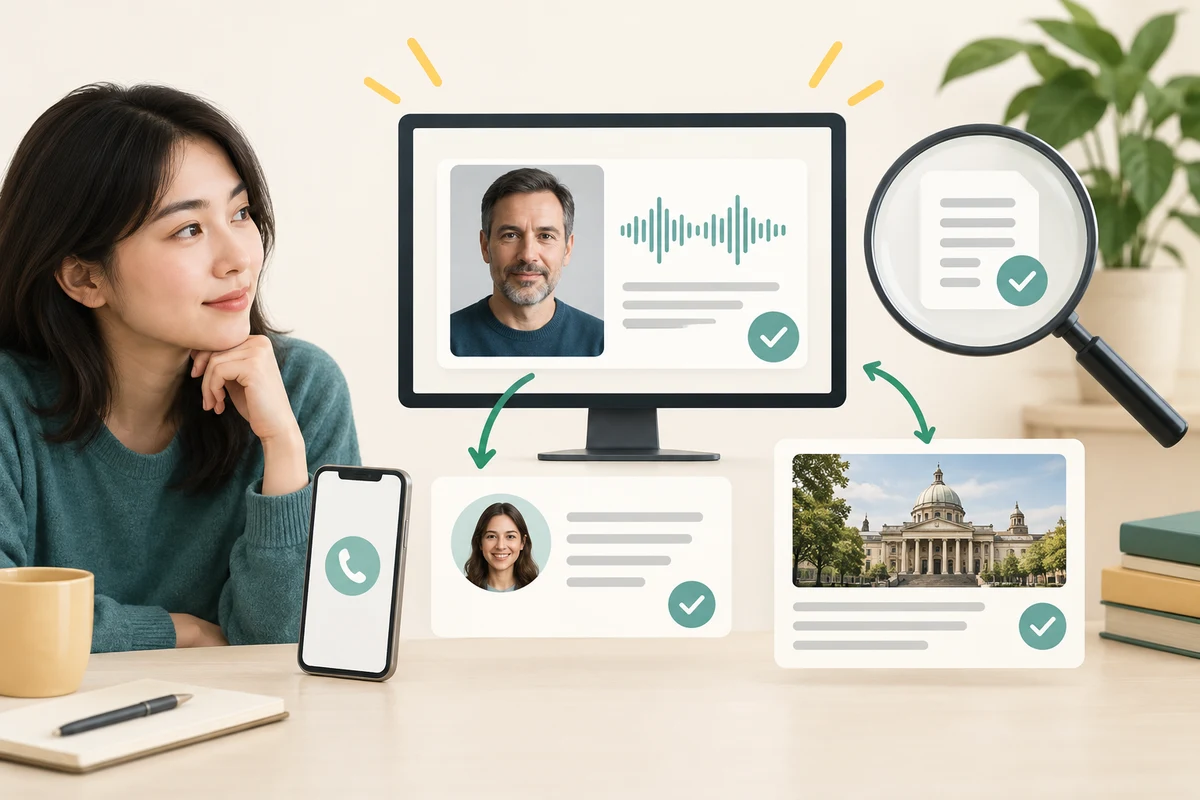
Check the request outside the media
How this works
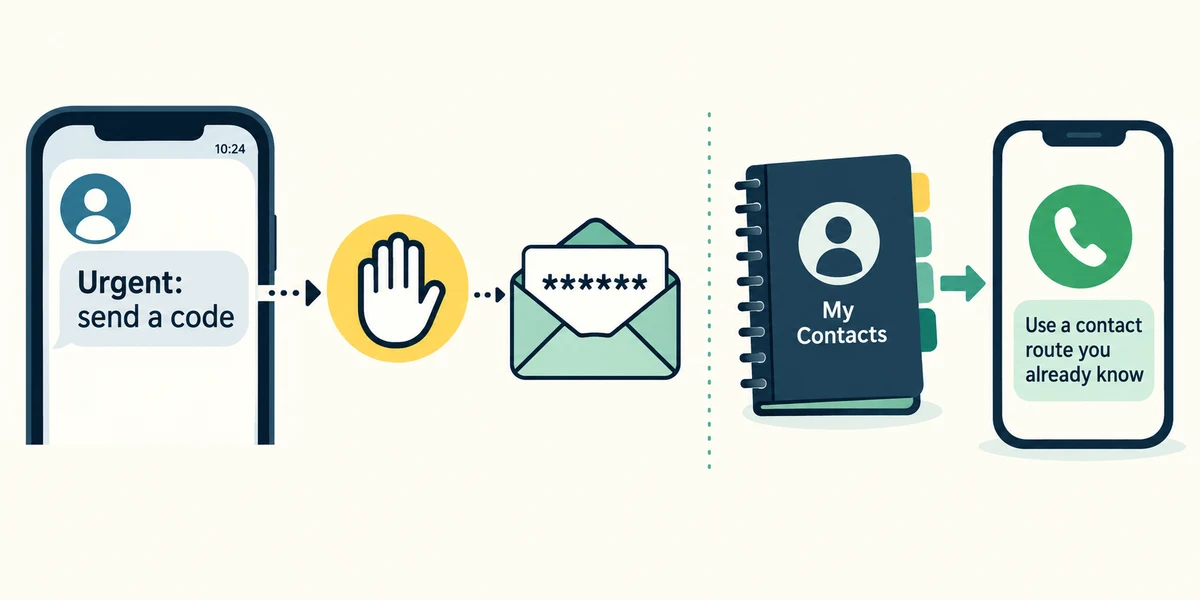
For an urgent request apparently from someone you know, stop before sending money, information or a code. Contact the person using a number or route you already held, not contact details supplied by that same message. A familiar voice, face or personal detail is not enough to establish identity.
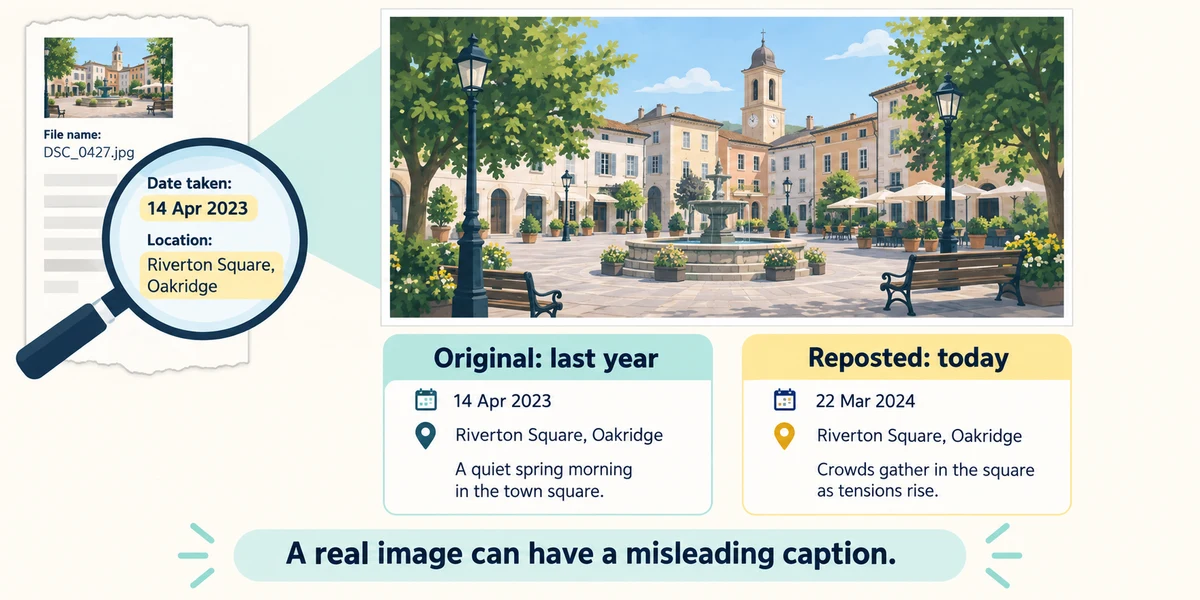
For a public image or news claim, find the original source and context where possible, then compare reliable independent reporting or the relevant organisation’s statement. Check when and where the material was first used. A real image can describe a different event from its caption.
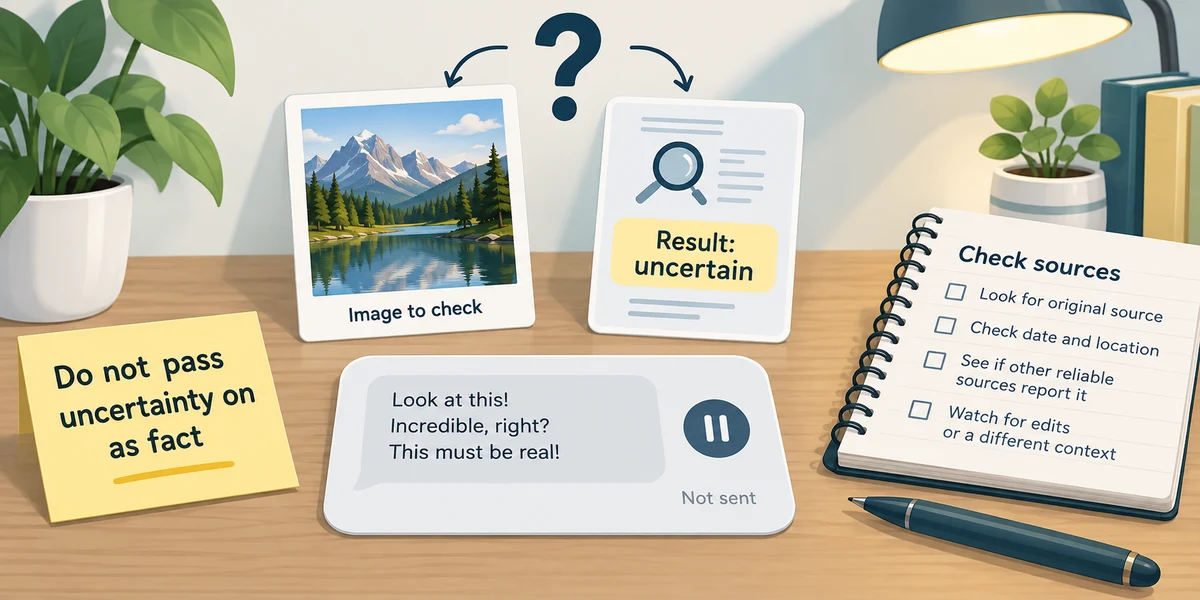
Visual oddities and automated detection tools can be clues, but neither a polished picture nor a detector result reliably settles every case. Avoid forwarding uncertain material as fact. If you already acted on a suspicious request, use the existing scam-response guidance and the affected service’s official help.
A voice message sounding like a relative urgently asks for a transfer to a new account. What is the useful next step?
Contact the relative through a number you already trust
Check what you understand
In guided learning, click Start 3 questions to receive a selection from this lesson. Click the circle beside an answer, then click Check answer. Read the feedback and try again if needed. Click Next question after each correct answer. Answer all 3 correctly to continue.
Returning to guided learning keeps the questions and answers in your current attempt.
Read all 3 questions and explanations
A real photograph is shared with a new event caption. What still needs checking?
Answer: The original date, place and context
Genuine media can still be used misleadingly. Context matters as well as whether it was generated.
A detector labels a clip genuine. What should you avoid assuming?
Answer: That this settles its identity and context with certainty
Detection tools have limits. Combine suitable evidence rather than relying on one label.
You are unsure whether a striking claim is true. What is a responsible next action?
Answer: Pause sharing it as fact while checking its source
Avoid amplifying an unverified claim. Check evidence and keep uncertainty clear.
Take this to your computer
- 1
Write down a known independent contact route you could use for an unexpected request. Do not share that private information with the lesson.
There is no universal visual test for synthetic media. The lesson teaches verification, not detection certainty.
Prefer a more personal, one-to-one lesson? Basic Computing can help. Explore our services.